Reliable Quality for a Learning-Focused Mobile App
Focus Tree is a fast-growing European startup building a mobile application for students. Our structured mobile app testing services supported product stability, UI consistency, and a smooth learning experience across devices.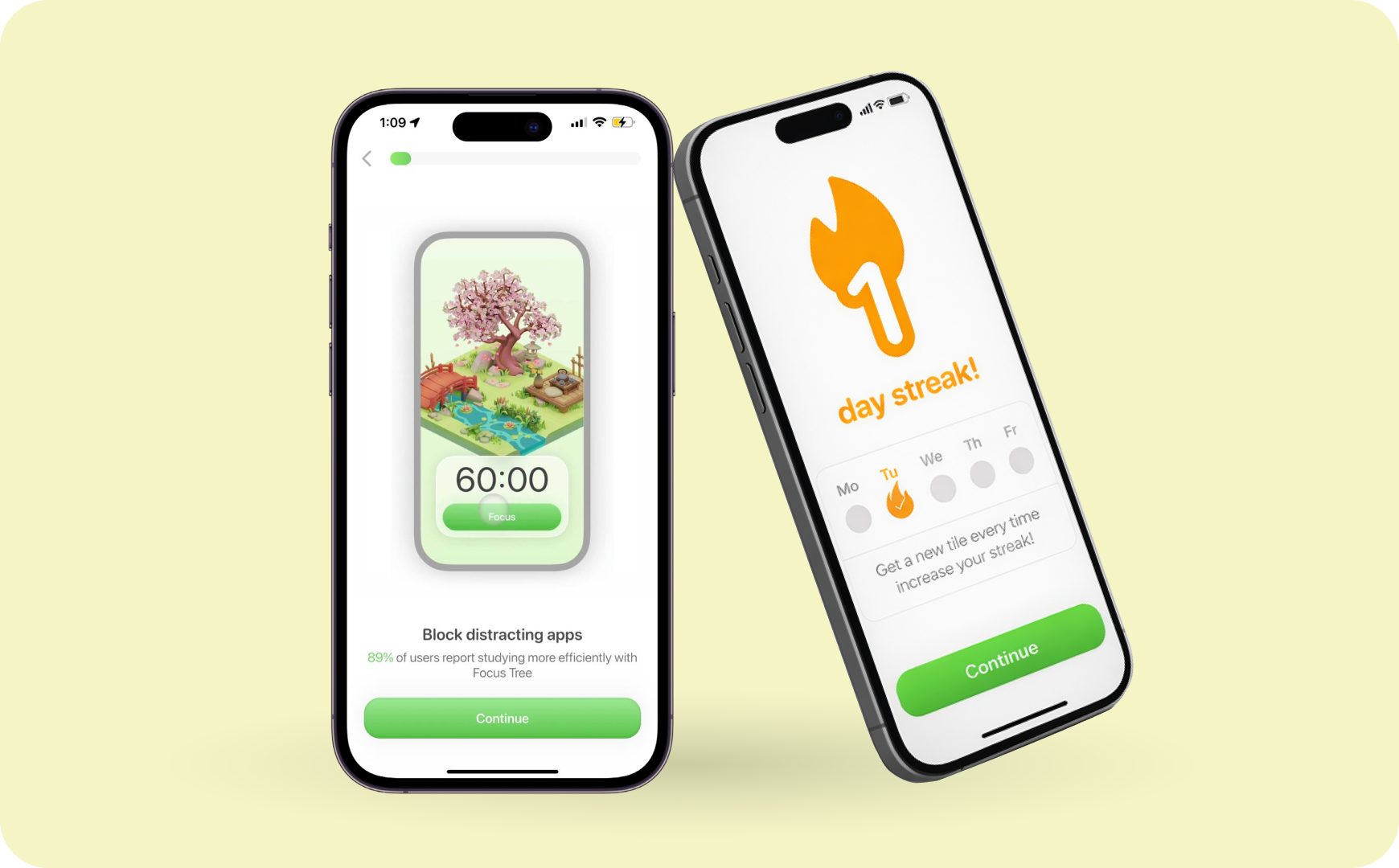
About the Project
Client’s Needs
Supporting Product Quality Through Mobile App Testing
The main focus was to strengthen product reliability through structured mobile app testing. We validated that new features, UI updates, and performance changes did not disrupt the learning experience students rely on daily. Testing was aligned with the iOS and Android development workflow, using GitHub to track changes and regressions.
Mobile app testing approach
For consistent behaviour across platforms, we used TestFlight for iOS testing and BrowserStack for cross-device and cross-version validation. This made it possible to observe how the app behaved on different versions, screen sizes, and device configurations.
Focus sessions and Pomodoro timers were tested for timing logic, state changes, and correct session completion. For flashcards, our EdTech software testing covered creation, study flow, card transitions, and progress updates. AI-powered quizzes testing focused on question display, answer selection, feedback screens, and final results on both iOS and Android.
Manual product testing
We started with exploratory testing and gradually built structured test coverage for focus sessions, flashcard study, quizzes, and progress tracking. Then, product testing expanded to smoke and sanity testing for each new build. Regression testing tracked the impact of updates on existing functionality.
Special attention was given to timers, session history, statistics, and navigation between screens. Retesting and confirmation testing were used to review fixes across iOS and Android versions.
UI and UX testing focused on real study scenarios. We reviewed screen transitions, text readability, visual hierarchy, quiz feedback states, and interaction consistency during longer focus sessions.
All findings were documented as structured bug reports and test notes, with clear reproduction steps for quality across releases.
Business Impact
Our mobile app testing brought more control into the release process. Issues were caught earlier, UI behaviour became more consistent, and updates stopped introducing unexpected problems for users.
As a result, app quality improved in ways students could feel right away: fewer disruptions during study sessions, clearer interactions, and better stability after updates. This was reflected in stronger app store ratings.
With a reliable testing flow, Focus Tree can keep shipping updates and maintain a steady experience for its growing student audience.